
Georgia Just Doubled Its Homestead Exemption. Here’s What It Means When You’re the Creditor.

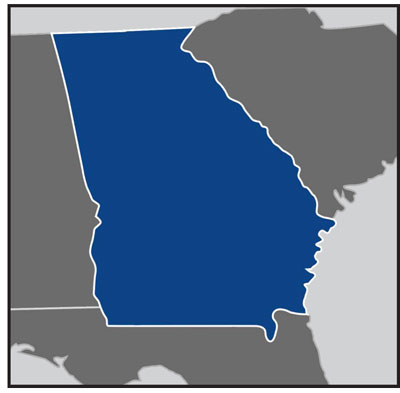
If you make loans to members in Georgia or have members who live in Georgia, a change is coming on July 1, 2026, that is worth your attention. On May 11, 2026, Governor Kemp signed House Bill 1024 into law, which more than doubles the amount of home equity a debtor can shield from creditors in Georgia.
The old numbers had been on the books for years: an individual could protect $21,500.00 of equity in a primary residence, and a married couple, who jointly owned the home, could protect $43,000.00. Under HB 1024, those figures jump to $50,000 for an individual and $100,000 for a married couple. And the increases do not stop there — beginning July 1, 2031, both amounts will be adjusted upward for inflation each year. In other words, the floor just rose sharply, and it is designed to keep rising.
Most of the coverage you’ll see on this law is written for homeowners and debtors, framing it as good news. For credit unions, it is a different conversation.
 First, the distinction that matters most: secured vs. unsecured
Georgia’s homestead exemption has never touched a consensual lien, and HB 1024 does not change that. If your credit union holds a properly recorded security deed on a member’s home, your foreclosure rights are completely unaffected. The same goes for a purchase-money mortgage. The exemption protects equity from unsecured creditors — it does not let a borrower wipe out the loan they voluntarily pledged the house to secure.
So where does this law impact a credit union? On the unsecured side of your book. Think signature loans, lines of credit, credit card balances, overdraft, and deficiency balances. When you reduce that kind of debt to a judgment and look for assets to satisfy it, the member’s home equity was once a realistic target. After July 1, 2026, a lot more of that equity is simply off the table.
In bankruptcy: less to collect and your judgment liens are more exposed
Georgia is an “opt-out” state, which means a debtor who files for bankruptcy here must use Georgia’s exemptions rather than the federal set. As a result, the new $50,000.00/$100,000.00 figures apply directly in every Georgia bankruptcy filed on or after the effective date.
The first effect is straightforward: a Chapter 7 trustee can only reach the non-exempt equity in a home. Raise the exemption, you shrink that pool. Plenty of homes that would have produced a distribution to unsecured creditors under the old cap will now be fully protected, and the case will close with nothing for the unsecured pool. In Chapter 13, the same logic applies to the “best interest of creditors” test – if the hypothetical Chapter 7 recovery is lower, the minimum a plan must pay unsecured creditors can drop right along with it.
The second effect is the one that catches creditors off guard. The Bankruptcy Code lets a debtor avoid a judicial lien (like a recorded judgment lien) to the extent it impairs an exemption the debtor is entitled to claim (that’s the tool at 11 U.S.C. § 522(f)). With the exemption now more than double its old size, far more judgment liens will “impair” the homestead and be subject to being stripped off. And here’s the part to underline: the exemption a debtor gets to claim is generally the one on the books when they file. A judgment lien you recorded back when the exemption was $21,500.00 is not grandfathered at that level. If the member files after July 1, 2026, your old lien is measured against the new, larger exemption — and may well be avoidable. The “record a judgment and wait for the equity to build” strategy just got a lot less reliable.
In state court: levying on the home gets you less
Outside of bankruptcy, the practical math shifts in the same direction. When your credit union holds an unsecured judgment and looks to the member’s residence to satisfy it, the homestead exemption is exactly what shields the equity from levy. Doubling the protected amount means that for a large share of Georgia homeowners, there’s now little or no exposed equity left to reach. A levy that once promised a meaningful recovery may now barely clear the costs of pursuing it.
This doesn’t make recording a judgment pointless—a properly recorded Fi.Fa. still creates a lien on the debtor’s real property and can capture genuinely non-exempt equity. But it does mean two things. First, you should expect to recover against fewer homes and smaller slices of equity. Second, as noted above, any lien you’re sitting on is now far more vulnerable if the member ever files (Georgia’s exemption-against-levy mechanics have their own wrinkles, so for a specific file we are happy to walk through any fact pattern with you).
What didn’t change
A few things stayed put, and they’re worth keeping in mind
- Consensual liens are untouched. Your security deeds and purchase-money positions are as strong as ever.
- The usual carve-outs survive. The homestead exemption still won’t stop a security-deed foreclosure, a tax lien, or a domestic-support obligation.
- The “wildcard” cap held. HB 1024 amended only the homestead paragraph. The separate provision that lets a debtor apply unused homestead to other property is still capped at $10,000.00 – so the bigger homestead doesn’t translate into bigger protection for cars, cash, or other personal property.
The bottom line for credit unions
- Lean on your collateral. This law is a reminder that your real protection comes from a perfected, consensual lien, not from the hope of chasing home equity after the fact. For larger consumer loans and member-business credit, securing the loan on the front end matters more than ever.
- Re-value your unsecured recovery prospects. If your collection and charge-off models assume you can reach a Georgia member’s home equity to satisfy a deficiency or signature-loan judgment, those assumptions need a refresh as of July 1, 2026.
- Don’t assume old liens are safe. A judgment lien recorded before the increase is still exposed to the new exemption in a later filing. Factor that into how you value and pursue existing judgments.
- Reset your workout posture. Members with homes now hold more leverage in settlement talks, because your fallback (reaching their equity) is weaker. Pricing that into negotiations early can lead to better, faster resolutions.
CFPB Revises Section 1071 of the Dodd-Frank Act

In response to the 2008 Financial Crisis, Congress passed the Dodd-Frank Wall Street Reform and Consumer Protection Act (“Dodd-Frank Act”). The law was signed by President Barack Obama in 2010 with the following primary directives: (1) promote financial stability, (2) prevent taxpayer-funded bailouts, and (3) protect consumers from abusive financial practices
. Naturally, the Dodd-Frank Act encompassed a vast amount of territory. In addition to its directives, it created the Consumer Financial Protection Bureau (“CFPB”). The CFPB promulgates and enforces rules for financial institutions, including Credit Unions. One of the areas that Congress instructed the CFPB to monitor in the Dodd-Frank Act was small business lending.
Congress has expressed interest in credit availability for small businesses, as a means to stimulate the economy and create jobs. Specifically, Section 1071 of the Dodd-Frank Act “amended the Equal Credit Opportunity Act (ECOA) to require financial institutions to compile, maintain, and submit to the Bureau certain data on applications for credit for women-owned, minority-owned, and small businesses,” according to the CFPB’s website.
Thus, Section 1071 of the Dodd-Frank Act requires the CFPB to “collect data from lenders concerning loan applications made by small businesses with the goals of better understanding the financing needs of those owned by women and minorities and identifying possible discrimination,” according to congress.gov.
This directive required financial institutions to (1) inquire whether a business is women-owned, minority-owned, or a small business and (2) maintain a record of responses to the inquiry, when the financial institution received an application for credit from a women-owned, minority-owned, or a small business.
The original directive required financial institutions that made as few as 100 credit originations per year to comply with the above. However, the CFPB recently released a revised Section 1071, which increased that number to 1,000 credit originations per year. This means that Credit Unions with 1,000 covered transactions in each of the previous two years are covered under this revised rule and must comply.
The revised rule made additional changes. First, it changed the definition of small business. Under the original rule, a small business was defined as a business that made $5 million in gross annual revenue. The revised rule decreased that amount to $1 million.
Second, the revised rule now excludes the following types of loans from the reporting requirement: (1) Merchant Cash Advances, (2) Agricultural Lending, and (3) Small dollar credit (loans less than $1,000.00).
Finally, the revised rule reduced the number of data points for collection. The revised rule eliminated the following data points: (1) application method, (2) application recipient, (3) denial reasons, (4) pricing information, and (5) number of workers, among other items.
The compliance date for the revised rule is January 1, 2028. Financial institutions must begin collecting twelve months of data at that point for submission on June 1, 2029.
The revised rule streamlines the collection and reporting requirements for financial institutions, including Credit Unions. Please reach out to an attorney at SVL for compliance questions and assistance.
Staff Spotlight on Trace Wells

Traci was born in Atlanta, Georgia. She moved to Clearwater, Florida, when she was nine years old. She lived in the Tampa Bay area for most of her life before moving to Tallahassee two years ago. She had visited Tallahassee many times in her childhood because her mom’s sister and cousins lived here – she knew it would be a great town to end up in. Traci has two daughters who still live in the Tampa Bay area; Emily (22 years old) and Elisabeth (16 years old). Emily is a graphic designer and Elisabeth will be starting her junior year in high school this August.
Traci joined our firm in September 2025 and is a legal clerk who handles recording and certifying final judgments. Traci also assists the post-judgment department with several tasks as well. During her spare time, Traci loves arts and crafts, music, boating, and the beach. She also likes to garden and has a passion for health and wellness; Traci has volunteered with a health food co-op for many years and became a certified fitness trainer/nutrition coach. Traci also enjoys being involved with her local church and helping the community when she is able.
Traci, thank you so much for your hard work at SVL. We look forward to many more years with you
Staff Spotlight on Lilly Pollard

Lilly is originally from Fort Wayne, Indiana. She moved to Largo, Florida, when she was six years old. She grew up with two brothers and is the middle child in her family. Lilly was a competitive cheerleader, played indoor and outdoor volleyball, flag football, and basketball in school. She was also a synchronized swimmer for four and a half years.
Lilly graduated from Florida State University in 2024 with her Bachelor’s in history and a minor in Humanities, specializing in Classics and English. The ancient world and the Renaissance fascinate her! On Lilly’s bucket list are trips to Greece and Italy! Currently, Lilly is working towards her master’s in law from Northeastern University in Public Policy.
Lilly has been a part of the SVL team since June 2025. She is one of the legal assistants in our bankruptcy department. Away from the office, Lilly enjoys reading and spending time with her cat, Louie. She is also a big movie buff (especially 80s movies) and enjoys musicals and trivia too. A weekly must for Lilly is going line dancing with her friends.
Lilly, thank you for being such a dedicated team player for the firm. We appreciate you!
2026 CUCP Summit
The 2026 CUCP Collections Summit was held in Tampa, Florida, on May 12-14, 2026, and Sorenson Van Leuven had the opportunity to be a gold sponsor for the event. This three-day conference delivers training and provides networking opportunities with other collection professionals. It was great connecting with everyone, and we look forward to next year.

ENGAGE Conference 2026

Our firm attended the ENGAGE Conference in Orlando, Florida, on June 10-12, 2026. The ENGAGE Conference is an annual event we do not miss and one we look forward to each year. We enjoy having the chance to visit with our Credit Union clients and the opportunity to host a booth inside the exhibit hall. ENGAGE is hosted by The League of Credit Unions & Affiliates and features expert speakers and breakout sessions for leaders across Alabama, Florida, Georgia, and Virginia.