

When Bankruptcy is Mentioned: Avoiding Premature Releases
and Lost Leverage

Credit Unions frequently hear borrowers reference “bankruptcy” in ways that are incomplete, vague, or strategically timed. These statements often cause collection files to stall while staff try to determine whether collections must stop. They may appear in handwritten Answers, emails, text messages, or statements such as “this was in my bankruptcy,” or “I filed before,” with no supporting information or general hardship statements framed as bankruptcy.
\While caution is appropriate, paralysis is not. The critical distinction is simple: mentioning bankruptcy is not the same as filing bankruptcy. Even when the petition has been filed, timing determines what actually changes. Understanding procedural posture allows creditors to avoid stay violations without surrendering rights that bankruptcy law does not eliminate.
A bankruptcy reference is not a bankruptcy filing.
Informal references do not trigger the stay. The automatic stay arises only upon the filing of a bankruptcy petition. 11 U.S.C. § 362(a). Until that moment, there is no stay in effect. Courts do not require creditors to assume a bankruptcy exists based on unsupported statements. The proper response is verification, not suspension of the file.
For example, a borrower may file an Answer, stating that the debt “was included in bankruptcy,” yet provide no case number, court, or filing date. Without confirmation that a petition has actually been filed, that statement alone does not establish that the automatic stay is in effect. Of course, once a bankruptcy filing is confirmed, any continued collections activity must stop immediately to avoid violating the automatic stay.
Creditors can verify whether a bankruptcy case has actually been filed by searching the federal court system through PACER (Public Access to Court Electronic Records) at https://pacer.uscourts.gov/. PACER provides nationwide access to bankruptcy filings, though users must first create an account to conduct searches. If a filing cannot be confirmed or additional guidance is needed, creditors may also contact our office to assist in verifying whether a bankruptcy case exists and determining the appropriate next steps.
Claim classification turns on origination, not default.
Another frequent misunderstanding is the belief that repossession, sale, or calculation of a deficiency creates a new post-bankruptcy debt. Bankruptcy law does not operate that way. A “claim” arises when a loan obligation is incurred, not when the borrower defaults or collateral is sold. 11 U.S.C. § 101(5). An obligation arising before the bankruptcy filing constitutes a pre-petition claim, even if the right to payment is contingent or unmatured at the time of filing, and later repossession or deficiency calculations do not convert that obligation into a post-petition claim. This timing distinction matters when defendants rely on vague references rather than confirmed filings.
Pre-judgment v. Post-judgment: Two different analyses.
Before judgment, the question is straightforward:
- If no petition has been filed, litigation may proceed.
- of a petition has been filed, the automatic stay applies to pre-petition claims.
After judgment, the analysis changes. The focus shifts from the existence of the debt to enforcement of that judgment. A bankruptcy filing does not retroactively invalidate a judgment entered before the petition date. A subsequent discharge eliminates only the debtor’s personal liability and therefore limits how the judgment may be enforced. As the Supreme Court explained in Johnson v. Home State Bank, 501 U.S. 78 (1991), a discharge eliminates personal liability but does not automatically eliminate valid liens. This distinction is where many files freeze unnecessarily.
Discharge does not equal lien elimination.
A discharge under 11 U.S.C. § 524(a) bars collection against the borrower personally. It does not automatically remove the liens attached before the bankruptcy filing. Lawyers describe surviving lien rights as “in rem” rights. These are rights against the property itself rather than the borrower. A lien is removed only if the debtor obtains a specific bankruptcy court order avoiding it, most commonly under 11 U.S.C. § 522(f). Without such an order, the lien remains. Treating discharge as synonymous with lien removal leads to premature releases and lost leverage.
Chapter 7 v. Chapter 13: Why collection files freeze (and when they shouldn’t).
|
Issue |
Chapter 7 |
Chapter 13 |
|---|---|---|
| Core structure | Liquidation and discharge of personal liability | Court-approved repayment plan |
| Automatic stay | Stops new collection activity while the case is pending | Stops enforcement while the plan is pending |
| Effect on judgment | Judgment remains legally valid | Judgment remains legally valid |
| Effect on pre-petition lien | Survives unless the debtor obtains a lien-avoidance order | May be addressed in the plan but it is not automatically removed |
| When enforcement resumes | After a stay relief, dismissal, or case closure | After stay relief, dismissal, or plan completion |
| Common mistake | “Discharge means the lien disappeared.” | “The plan invalidated the judgment.” |
Florida and Georgia: same practical rule.
Bankruptcy law is federal; lien mechanics are state-specific. In Florida, a hybrid system is used: judgment liens on personal property arise through a statewide registry, while real property liens depend on county recording. Georgia relies primarily on county recording, where filing a writ of fieri facias (Fi. Fa.) creates a real property lien in the county of record.
Despite the different terminology, the result is the same in both states: a properly recorded pre-petition lien survives discharge unless affirmatively avoided in the bankruptcy court. Discharge alone does not determine whether a lien must be released.
Verification Framework
When bankruptcy is mentioned, ask:
- Was a petition actually filed?
- What is the filing date?
- Has the judgment already been entered?
- Was a lien recorded before the petition date?
- Did the bankruptcy court enter an order avoiding that lien?
Verification should precede suspension of the file. Internal preparation may continue and deadlines preserved. Enforcement should pause only if a petition is confirmed.
Summary
- Informal bankruptcy references do not trigger the automatic stay.
- Claims arise at loan origination, not at default or repossession.
- Discharge bars personal collection, not necessarily property rights.
- Pre-petition liens survive unless affirmatively avoided.
- Timing determines authority.
Bankruptcy is not a universal stop sign. It is a timing-based legal framework: confirm first, pause after.
If you have questions regarding the impact of bankruptcy on a collections matter or judgment enforcement, please contact a lawyer at our office. We would be happy to discuss your situation.
Rising Auto Loan Delinquencies: Repossession and Deficiency Issues for Credit Unions in Florida and Georgia

Auto lending remains one of the largest asset categories for most Credit Unions, particularly in Florida and Georgia. As economic pressures continue, as the price of vehicles continues to grow, and as interest rates are elevated, many institutions are beginning to see increased delinquencies and repossessions in their auto portfolios. While both Florida and Georgia follow Article 9 of the Uniform Commercial Code (UCC), governing secured transactions, there are important differences in repossession procedures, notices, and deficiency recovery that Credit Unions must understand.
Both Florida and Georgia allow creditors to repossess vehicles after default, without judicial process, provided the repossession occurs without a breach of the peace. That being said, Credit Unions need to keep in mind some key considerations, such as:
- Using licensed repossession agents;
- Avoiding confrontations with borrowers during repossession;
- Proper handling and storage of borrower personal property; and
- Maintaining documentation of the repossession process.
While there are many similarities in the laws governing Florida and Georgia, there are also some differences, and the practical litigation environment differs between the two states. Improper repossession can expose lenders to claims for conversion, wrongful repossession, or consumer protection violations.
In Florida, deficiency actions following repossession are common but must strictly comply with the notice requirements under Florida Statutes, Chapter 679. Important considerations include sending a compliant Notice of Disposition of Collateral after Repossession; an Explanation of Deficiency/Surplus, if necessary; and conducting the sale in a commercially reasonable manner. Florida courts closely scrutinize the sufficiency of notices. Defective notices can limit or eliminate the ability to recover a deficiency balance or possibly lead to a class action lawsuit with serious liability. Additionally, Florida’s consumer litigation environment often leads to borrower challenges regarding a breach of the peace during repossession, failure to provide proper post-repossession notices, and the commercial reasonableness of vehicle sales.
In Georgia, O.C.G.A. § 11-9-601 through 11-9-628 governs repossession and collateral disposition. Georgia courts have historically been particularly strict regarding the commercially reasonableness of the sale, timing of the Notices, and type of Notice sent. For instance, the Notice of Plan to Sell letter must be sent within 10 days of the repossession and failure to do so is detrimental to any possible deficiency action. It also matters what type of letter is sent. If the contract is a Retail Installment Sale Contract, then Georgia law requires a special “right to redeem and public sale notice,” which most Florida-based Credit Unions do not have. The additional provision is as follows:
Under the law, you have a right to redeem or demand a public sale of the above-described collateral. This must be requested in writing from you and sent by registered or certified mail or statutory overnight delivery addressed to us within ten (10) days of the date of this letter. Proceeds will be applied as previously stated in this letter.
Again, this special notice is only required when the contract is a Retail Installment Contract and the collateral is a motor vehicle. This language would not be required when using the Credit Union’s own loan documents.
As delinquency levels rise, Credit Unions that maintain well-documented repossession procedures and state-specific compliance practices will be better positioned to recover losses while minimizing legal risk. I would recommend that your Credit Union consider reviewing its repossession vendor agreements annually, updating repossession and disposition notice templates, documenting collateral sale procedures, and evaluating deficiency recovery strategies. Understanding the nuances of each state’s repossession and deficiency framework is essential to protecting lien rights and maintaining effective collection strategies. If you have questions or if we can be of help, please reach out to a lawyer at our firm.
Staff Spotlight on Noel Harlan

Noel is originally from Chicago, Illinois. She moved to Florida for college where she attended Florida Agricultural & Mechanical University (FAMU) in the spring of 2025. She graduated with a bachelor’s degree in political science. While in college, Noel met her now husband Trevor at Chick-fil-A where they were both were employed. They dated for two and a half years and got married on November 14, 2025. During the holidays, Trevor and Noel located an 11-week-old Basset Hound mix off Facebook and brought him home. The pup’s name is Todd and Noel says he loves cookies and playing a rough game of tug o’ war.
Noel is one of our legal assistants in the collections department and has been a part of the SVL team since April 2025. She mentioned that what she likes most about working at the firm is the kindness that the staff here share with one another. This is a perspective that we love to hear!
Away from the office, Noel likes going for runs in her neighborhood or at a local park here in Tallahassee called Cascades. She also enjoys cooking and doing strength training. Noel began cooking at the age of 4 and loved cooking pizzas as a young chef. Now cooking a basic steak dinner with different yummy sides is her go-to meal. One more fun fact about Noel is that she is a travel agent. Her love for traveling came from her grandmother who is also an agent. Noel has been an avid traveler since the age of 12 and her most treasured trip was to China – she says the education behind the tours, the beautiful gardens, and the food were amazing!
We are grateful to have you here at SVL, Noel.
Staff Spotlight on Alejandra Fernandez

Ale is originally from Toluca, Mexico, but she now resides in Guadalajara, Mexico. Ale often visits her extended family in her hometown. Ale has two daughters, Giovanna, who is 21 years old and Nikita, who is 17 years old. Giovanna is fashion design student. She has earned recognition on local television in Mexico! Nikita is in high school. She excels in academics and flag football. Ale has a strong connection to her heritage and feels she brings this strong sense of family values to our SVL team.
Ale has been a part of our firm since April 2025. She takes immense pride in her role as a collections legal assistant. Away from the office, Ale spends most of her time centered around her daughters and their various activities. She also enjoys cooking and learning new culinary skills. Ale’s specialty and favorite dish to cook is pork tacos. Ale would love to learn how to make homemade tortillas from scratch and hopes to learn that next! On the weekends, Ale and her friends have a tradition to engage in weekly card game of Phase 10. Ana, another collections legal assistant from our office usually wins!
Ale, we are grateful for you and the values you bring to our team.



 In commentary surrounding the bill, the Florida Legislature “acknowledges that Florida Statute § 559.72 was adopted before email communication became commonly used, and that the only specific communication explicitly contemplated in such subsection is telephone calls.” Senate Bill 232 sought to “update and clarify prohibited practices in collecting debt to address email communication by excluding such communication from prohibited contact between the hours of 9:00 p.m. and 8:00 a.m. because such contact is less invasive and less disruptive than telephone calls.”


 The staff of Sorenson Van Leuven enjoyed Halloween at the office on Friday, October 31, 2025. We had our annual costume contest, which included our Tallahassee and Mexico team. Congrats to our Winners: First Place: Sarah, as a pinata. Second Place: Ale, as a pirate. And Third Place: Noel, as an inflatable cow. We love making SVL a fun working environment.



 The new system requires that each judicial circuit define three case management tracks: complex, general, and streamlined. The rule empowered the Chief Judge in each judicial circuit to issue administrative orders defining the deadlines for each track. Most collections court cases will fall under the streamlined track. Under the new rule, the streamlined track must address time periods and deadlines for the following: service of the complaints; adding a new party; completing discovery; filing a motion for summary judgment; and completing mediation.


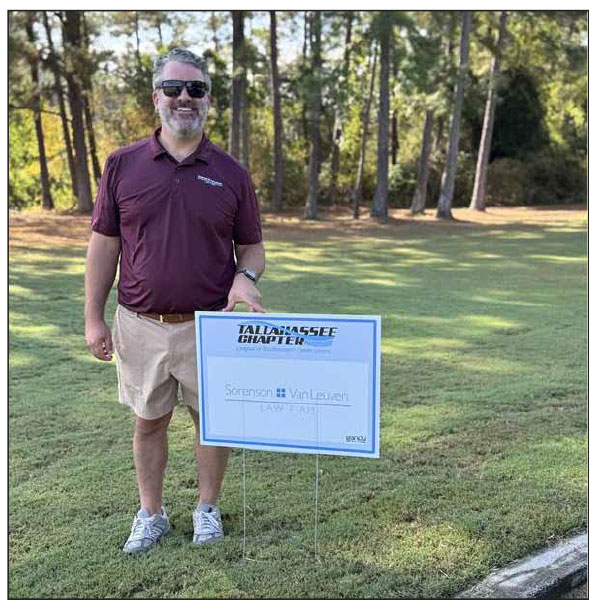 Sorenson Van Leuven was pleased to participate as a Gold Sponsor at the Tallahassee Chapter of Credit Union’s Golf Tournament on September 22, 2025. The event was held at Golden Eagle Country Club, in Tallahassee, Florida. Steve Orsillo represented the firm and had a great time playing in the tournament.
 Sorenson Van Leuven was pleased to participate as a Gold Sponsor at the Tallahassee Chapter of Credit Union’s Golf Tournament on September 22, 2025. The event was held at Golden Eagle Country Club, in Tallahassee, Florida. Steve Orsillo represented the firm and had a great time playing in the tournament.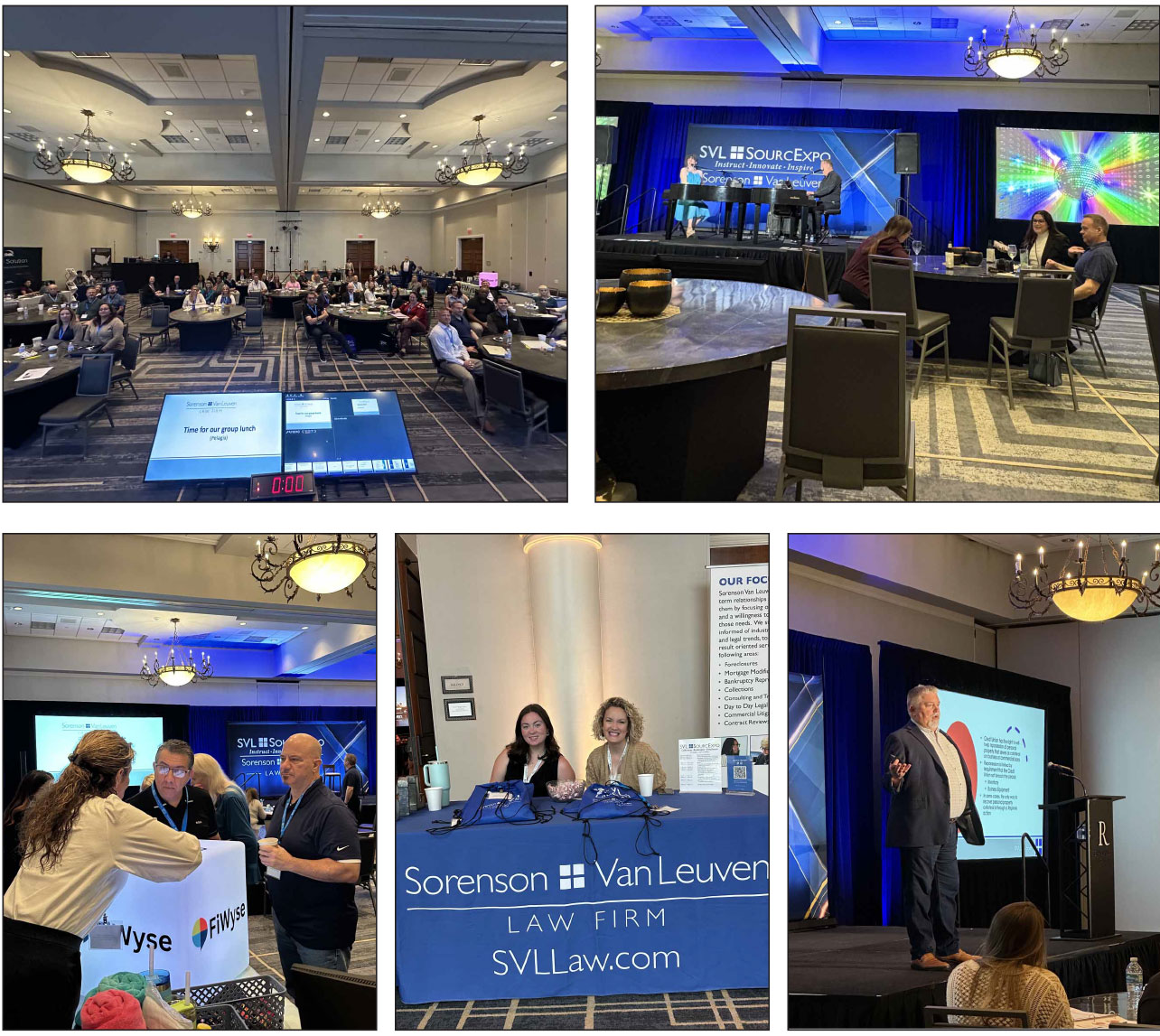
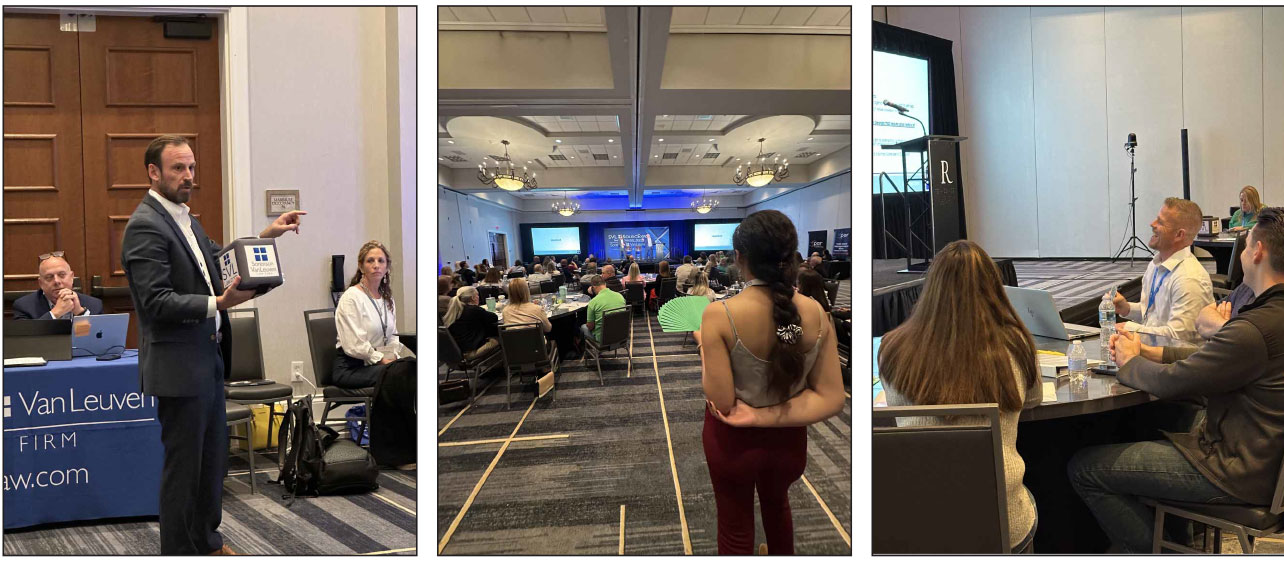
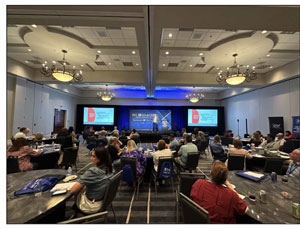
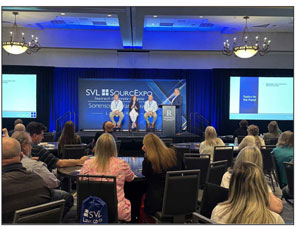 Ready to join us next year? We are excited to announce we will be hosting again in Tampa at the Renaissance International Plaza Hotal for our SVL SourcExpo 2026. The dates for next year’s conference will be July 15th-17th, 2026. Be sure to save the date and join us!
 In a Chapter 7 “no-asset” case, where the bankruptcy trustee determines there are no assets to distribute to creditors, courts generally hold that all dischargeable debts are wiped out—even if the creditor didn’t receive notice. This is based on the idea that filing a proof of claim wouldn’t have changed the outcome, so the lack of notice caused no practical harm.


 Our firm attended the ENGAGE Conference in Orlando on June 17-June 20 and we had a great time visiting with our Credit Union clients and seeing all of you there. We also had the opportunity to host a booth inside the exhibit hall where we are able to interact and network, as well. This event is always one we look forward to each year.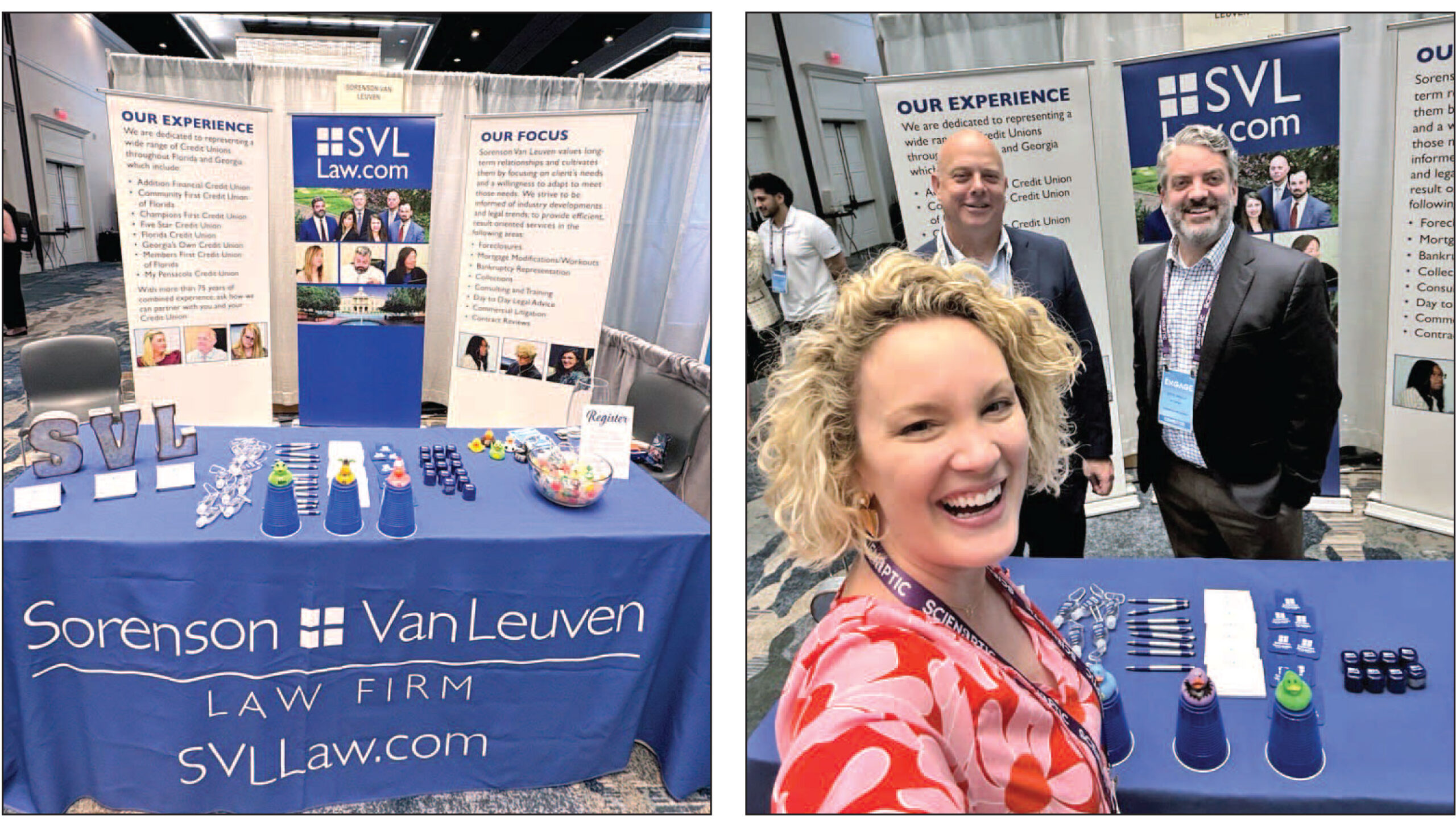


 In Quinn-Davis, the debt collector sent an e-mail to the debtor at 8:23 p.m. It was received in the debtor’s e-mail inbox at 10:14 p.m. but was not opened by the debtor until 11:44 a.m. The debtor sought to bring a class action lawsuit against the debt collector alleging that the e-mail violated the FCCPA in that it was sent between the hours of 9:00 p.m. to 8:00 a.m. in the time zone of the debtor. To prevail under this claim, the debtor must show (1) debtor was the object of a collection activity arising from a consumer debt, (2) the debt collector is a “person” under the FCCPA, and (3) whether the debt collector engaged in an act or omission prohibited by the FCCPA. The Court found “communicate with” is “the conveying of information regarding a debt directly or indirectly to any person through any medium.” In this case, the debt collector only communicated with the debtor when they opened the e-mail from the debt collector and not when the e-mail was sent or received.


 On January 9, 2025, we had our first ever Day of Celebration! At the event, we celebrated the wins and accomplishments of 2024. It was held at the University Center Club at Doak Campbell Stadium. We had a catered firm-wide lunch with games and prizes following. Our remote employees joined us via Zoom, which was a great addition! We look forward to 2025 and what is ahead for SVL.

 Under Rule 1.202, parties are required to confer before filing non-dispositive motions (typically related to discovery or amending pleadings), promoting collaboration and the resolution of disputes without judicial intervention. Notably, parties are not required to confer on motions for summary judgment, nor those seeking injunctive relief. The duty is imposed upon the moving party to ensure a meet and confer occurs prior to the filing of the motion. The movant is also required to file a Certificate of Conferral with the motion, addressing the date and means of the conference and whether there was an agreement as to the relief sought and the efforts made to obtain such an agreement.


 Finally, the proposed rule seeks to change some notice requirements. Servicers would be required to provide additional information in written early intervention notices, including the name of the owner of the mortgage loan, a description of each type of loss mitigation option that is generally available, and a reference to a website where the borrower can access a list of all loss mitigation options that may be available. When it comes to loss mitigation determination notices, the proposed rule would require that servicers provide a written response that includes key “borrower-provided inputs” that served as a basis for the determination, a list of other loss mitigation options that are still available, and the next steps that the borrower must take to be reviewed for these options. The notice must inform the borrower if the borrower has been reviewed for all available options and that no options remain. Additionally, specific notices must be provided in Spanish.


 On July 10-12, 2024, Sorenson Van Leuven held a successful SVL SourcExpo Conference at the Renaissance International Plaza Hotel in Tampa. We want to thank everyone who attended – the SVL team thoroughly enjoyed our time spent with each of you. We would also like to thank our sponsors: Allied Solutions, South Bay Remarketing Services, SWBC and United Solutions Company.


 On February 14, 2024, the Fourth DCA, in Desbrunes v. US Bank N.A., 2024 Fla. App. LEXIS 1092, held that the known and unknown heirs is not always a necessary and proper party to a foreclosure. In Desbrunes, the borrower passed away during pendency of the foreclosure. The Plaintiff sought to substitute the known and unknown heirs and appoint a guardian ad litem. The trial court entered final judgment of foreclosure, but upon appeal the Court initially held that the inclusion of the known heirs and unknown heirs was improper. In reaching its initial ruling the Court found that when the borrower and owner is deceased, the proper party is the estate’s legal representative appointed by a probate court, which in most cases is a personal representative, and not someone appointed by the foreclosure court or the heirs. When there is no estate or legal representative, the proper step is to petition for administration of the estate as a creditor. Upon a request for rehearing, the Court clarified its ruling by distinguishing between homestead and non-homestead property. In Florida, homestead property is not property of the estate and passes outside the estate. If the property is non-homestead, then it does become property of the Estate. Based on this clarification and the facts of the case, the Court reversed its ruling and found that final judgment of foreclosure was proper as the property was homestead. Desbrunes v. US Bank N.A., 2024 Fla. App. LEXIS 3570. However, had the property been non-homestead, the Court’s initial ruling would likely have been upheld to find that a legal representative of the estate must be added to represent the interest of the deceased borrower.
 Sorenson Van Leuven participated in the 24th Annual Friends of the NMCRS Charity Golf Tournament on April 5, 2024. This is an annual Golf Tournament in Pensacola, Florida, proudly supporting the Navy-Marine Corps Relief Society, Inc. The mission of this organization is to provide “financial assistance and educate service members to become financially self-sufficient and better managers of their personal finances.” Attorneys Steve Orsillo and Blair Boyd had a great time playing in this tournament and supporting the cause.
 On April 22, 2024, Sorenson Van Leuven participated in Gulf Winds Credit Union’s first charitable golf tournament called the Chip in Fore in Pace, FL. This event raised more than $33,000 with the support of the golfers, sponsors, and donations. It was a great day for networking, fun, and providing support to over 20 local non-profit organizations in the area. Tyler Van Leuven and Blair Boyd were in attendance at this event.


 In 2011, the law changed how interest applies to Florida judgments in two major ways. First, the law now reads that the rate of interest will be adjusted by the Chief Financial Officer on each quarter (on January 1, April 1, July 1, and October 1) of each particular year. The second major change in the law was that, not only does the amount of interest change quarterly, the rate of interest that applies to a particular already established judgment will vary quarterly until the judgment is paid in full. The statute is clear that nothing in the statute shall affect the rate of interest that is set in a contract.
 The Consumer Financial Protection Bureau (“CFPB”) has recently issued two advisories on the Fair Credit Reporting Act (“FCRA”). The CFPB was formed around twelve years ago in response to the Great Recession and serves as an aid to consumers in the financial sector. In addition to serving consumers, the CFPB is also responsible for supervising financial institutions, including Credit Unions. This supervision includes issuing guidance and interpreting certain legislation.
 For example, if a consumer had an eviction proceeding commence on May 20, 2020, and that eviction proceeding was dispensed on June 20, 2020, the seven-year timeframe would run from the May 20, 2020, date, not the June 20, 2020, date. The CFPB advised that this clarification was intended to promote data accuracy. The CFPB noted that some states had inconsistent procedures for reporting disposition of certain matters that led to uncertainty in consumer reports.
