

A Large Change to Small Claims Court
In a previous SVL update, we highlighted the changes to County Court Jurisdiction in Florida. (That SVL Update can be found under the News tab of our website: www.svllaw.com, where we explain that the Florida county court jurisdiction is increasing to $30,0000.00.) Considering those changes which take effect on January 1, 2020, the Florida Supreme Court has approved a new rule that changes the jurisdictional limits of small claims court. Currently, small claims court jurisdiction includes cases where the amount in dispute is up to $5,000.00. The new rule raises the limit to $8,000.00 effective January 1, 2020.
 If your Credit Union handles its own small claims cases, you can now file suit on claims where the principal balance is $8,000.00 or less. If you do not take advantage of small claims court to pursue charge-off debts without the use of a lawyer, now may be the time to consider using it to increase your recoveries in 2020.
Should you have any questions about small claims court or need training on the pursuit of debts through small claims court, do not hesitate to contact one of the lawyers at SVL.


 Under this new law, the jurisdiction of county court is increased to $30,000.00 effective January 1, 2020. As a result, after January 1, 2020, the jurisdiction for the circuit courts will be for any claims in excess of $30,000.00. Then on January 1, 2023, the jurisdiction of the county court is increased to include claims up to $50,000.00, which will give the circuit courts jurisdiction in any claim in excess of $50,000.00.
 After an initial review of the NPRM, it appears
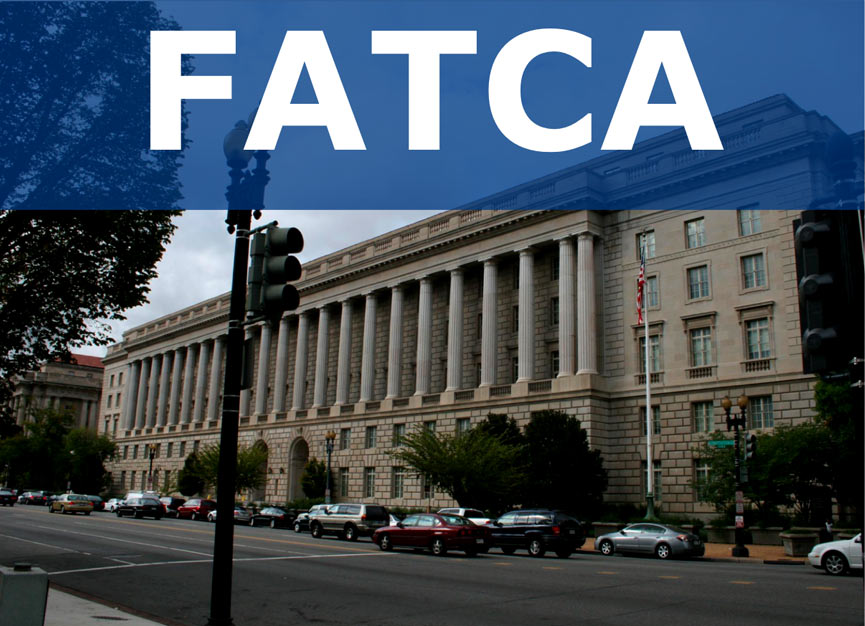 A new regulation goes into effect on January 1, 2019. This new regulation impacts insurance companies and requires that insurance companies distinguish between U.S. and foreign financial institutions. If a financial institution has not been identified as a U.S. financial institution, the insurance company will apply a thirty (30%) withholding to certain payouts and the amount withheld will be paid to the IRS. As such, insurance companies will be requesting a W-9 from financial institutions listed as a loss payee on an insurance policy.
 This opinion is the first written opinion by a Federal Circuit Court since the D.C. Circuit struck down the FCC’s definition of an ATDS earlier this year in its opinion, ACA Int’l v. Fed. Communication Commission 885 F.3d 687 (D.C. Circ. 2018). After the D.C. Circuit struck down the FCC’s broad definition of an ATDS, defense lawyers and business leaders hoped that the FCC and other courts would adopt a more restrictive definition.
 With the steady rise in home prices throughout Florida, more and more foreclosed properties are selling at foreclosure sales for amounts that exceed what the foreclosing lending is owed on its final judgment. These monies that exceed what the foreclosing lender is owed in their final judgment are called “surplus funds”. When you have surplus funds, all junior lienholders who were included as defendants in the foreclosure lawsuit may file a claim for the surplus funds. The Court will then hold a hearing to determine how the surplus funds should be awarded. The general rule in Florida is that the funds are to be paid to the junior lien holders who filed a claim based on their lien priority, with any remainder being awarded to the record owner of the property at the time that the lis pendens is recorded. Section 45.032 (2), Florida Statutes. Any junior lienholder who wants to make a claim has 60-days to file their claim. Where the lower Courts disagree is on the question of when that 60-days begins to run. Some Courts held that a junior lienholder had 60-days from the date of the foreclosure sale to file their claim. While other Courts held that the deadline did not begin to run until the Clerk issued the Certificate of Title. The Supreme Court in its holding in Glenville resolved any disputes among the lower Courts by holding that the 60-days begins to run once the Clerk issues the Certificate of Disbursements.
 Earlier this week, a Federal Judge in Michigan, ruled that the Telephone Consumer Protection Act (“TCPA”) covers so-called “direct drop” voicemail. The case is Karen Sanders v. Duck O’Neal, Inc., Case No. 1:17-cv-335, 2018 WL 3453967 (W.D. Mich. July 16, 2018). This opinion is the first known opinion to address this technology.

 On June 13, 2018, the CFPB issued a
 Unfortunately, Congress and the President reenact these protections for tenants in a residential foreclosure under the SB 2155, the Economic Growth, Regulatory Relief and Consumer Protection Act. As you are probably aware, this law was signed into law by the President last week. Based on news reports, it appears that this provision in SB 2155 was not widely known and has surprised many advocates of the new law. As before, the law requires a ninety-day notification to vacate by the lender (or third party new owner) to the hold-over tenant under a “bona fide” lease. This provision for protection to tenants goes into effect 30 days after enactment.
 The rule was challenged in a lawsuit by the U.S. Chamber of Commerce and other business groups. This rule was believed to create additional compliance burdens for businesses, including credit unions. CUNA and NAFCU have previously raised concerns about compliance challenges under the rule.